
Verified against ChatGPT · 2026-09-10
1986 couple studio portrait
The framed portrait that sat on the shelf — mottled canvas, a hard key, and the anchoring that stops two faces merging into one.
The prompt
Ready to copy — highlighted parts are example details you can swap.
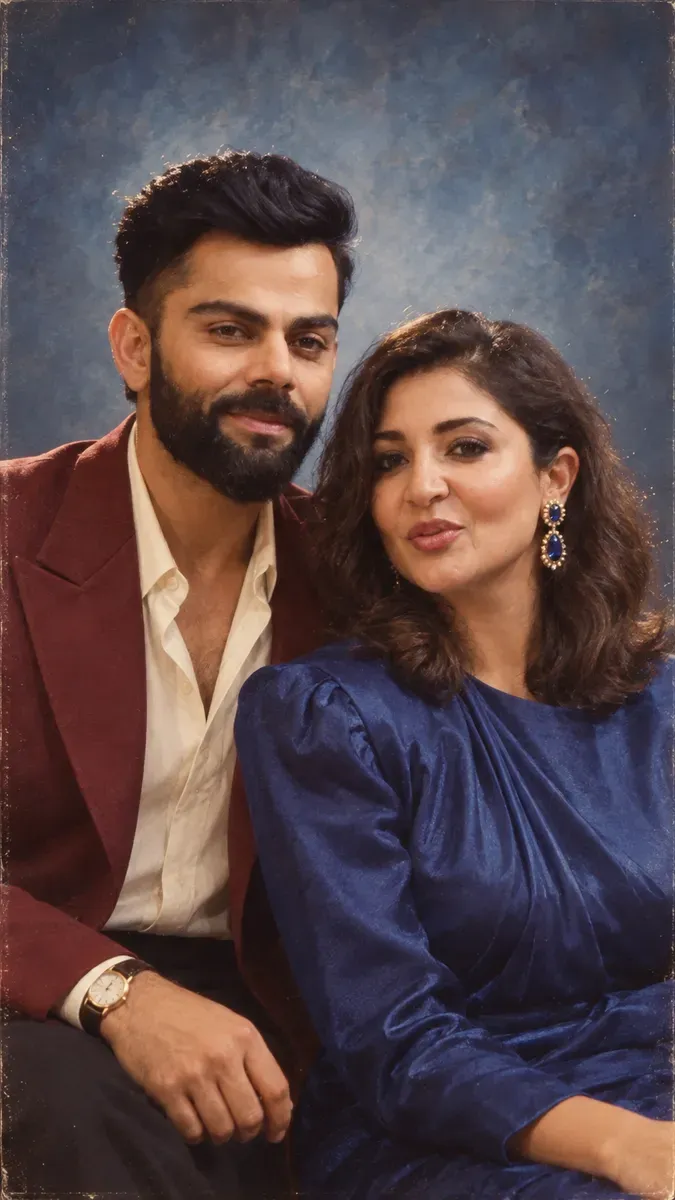
Use my uploaded photo, which has two people in it. Anchor each face to its counterpart by position: the person on the left stays the person on the left, the person on the right stays the person on the right. Do not merge, average, swap or blend the two identities, do not let features from one face drift onto the other, and do not make the two people look more alike than they are. Keep each face exactly as it is — same bone structure, nose, eyes, lips, skin tone, age and natural asymmetry, no slimming, lightening or smoothing on either. Change only hair, clothes, jewellery, pose and background. Make this a 1986 Indian portrait-studio photograph of the two of us: coordinated but not identical formalwear in deep jewel tones, padded shoulders on both, a sapphire blouse on one and a wide-lapel burgundy blazer over an open-collar shirt on the other, statement earrings on one and a simple watch on the other. We are seated close on a bench, shoulders angled inward toward each other, heads turned back to the lens and tilted marginally together, with soft closed-mouth smiles, one of us slightly behind and higher so our heads sit at different levels. Behind us a hand-painted mottled canvas backdrop in blue and grey-blue, lighter behind our heads. Hard key high and forty-five degrees left with a defined shadow under each nose, weak fill on the right, a hair light rimming both crowns, catchlights in all four eyes. Medium-format film on glossy paper, 1986: fine grain, warm skin tones, mild vignetting. Vertical 9:16, mid-chest up on both.
Take it further: the video prompt
Animates the photo above.
An image-to-video brief for Veo 3.1, Kling 3.0, Runway Gen-4.5 that continues this exact still, not a new scene — paste it alongside the generated photo.
Animate this exact still, not a new scene. Keep both our faces exactly as they are for every frame — same bone structure, nose, eyes, lips, skin tone, age and natural asymmetry on each of us, anchored to the same side of frame as the still, with neither identity drifting toward the other's. The only motion is a slow, near-synchronised blink from both of us and our heads settling a fraction further into the pose, catching the hair light for an instant longer; our clothes, jewellery and the backdrop stay completely still. Camera: a locked-off tripod shot, no push, no pan. The four-light studio rig must hold its exact balance for the whole clip, so the offset height between our two heads, the shadow under each nose and the lighter halo of backdrop behind us all stay fixed. Keep the fine medium-format grain, the warm skin tones and the mild vignetting exactly as strong throughout. No sound, or at most a very faint studio-room hush — no music, no dialogue. Exclude any object entering frame or any change to the backdrop. Output: 5 seconds, one unbroken shot, no cuts, vertical 9:16 matching the still exactly, loop-safe.
Why this works
Two faces fail differently from one. The specific failure is identity bleed — the model averages the two faces toward a shared middle and both people come out looking like siblings. Anchoring each output face to its source counterpart by position gives the model a correspondence to hold. The offset head height matters too: real studio photographers never placed two heads at the same level, so equal heights read as an AI composite even when both likenesses are perfect.
What you get back
A well-modelled two-up studio portrait with offset head heights and both likenesses intact. Check both faces before sharing — bleed is the failure to watch for.
Verified against
ChatGPT GPT Image · 2026-09-10
Nano Banana / Gemini 3.1 Flash Image Gemini app · 2026-09-10
Changelog
- 2026-09-09 — Written for the September 2026 80s photo trend.
- 2026-09-10 — Rewritten as a single copy-and-go paragraph with no fill-ins, and paired with an example image.
Need this built into your business?
If a prompt isn't enough — what Scult builds, built and maintained for you — that's Scult's day job.
EXPLORE WHAT SCULT BUILDSMore Photo Trends prompts
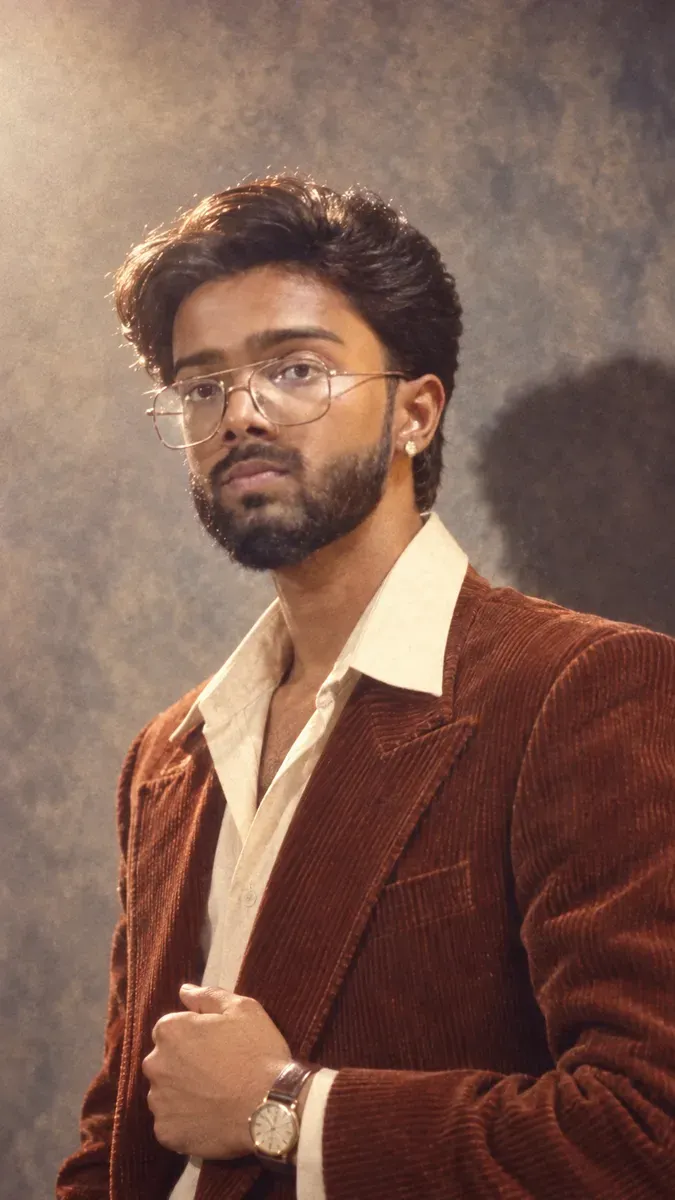 80s Bollywood studio portrait (men)The hard-flash studio portrait from mid-80s Hindi film publicity stills — corduroy blazer, mottled canvas, one hot light and a hard shadow.ChatGPT (GPT Image)Nano Banana (Gemini 3.1 Flash Image)2026-09-10
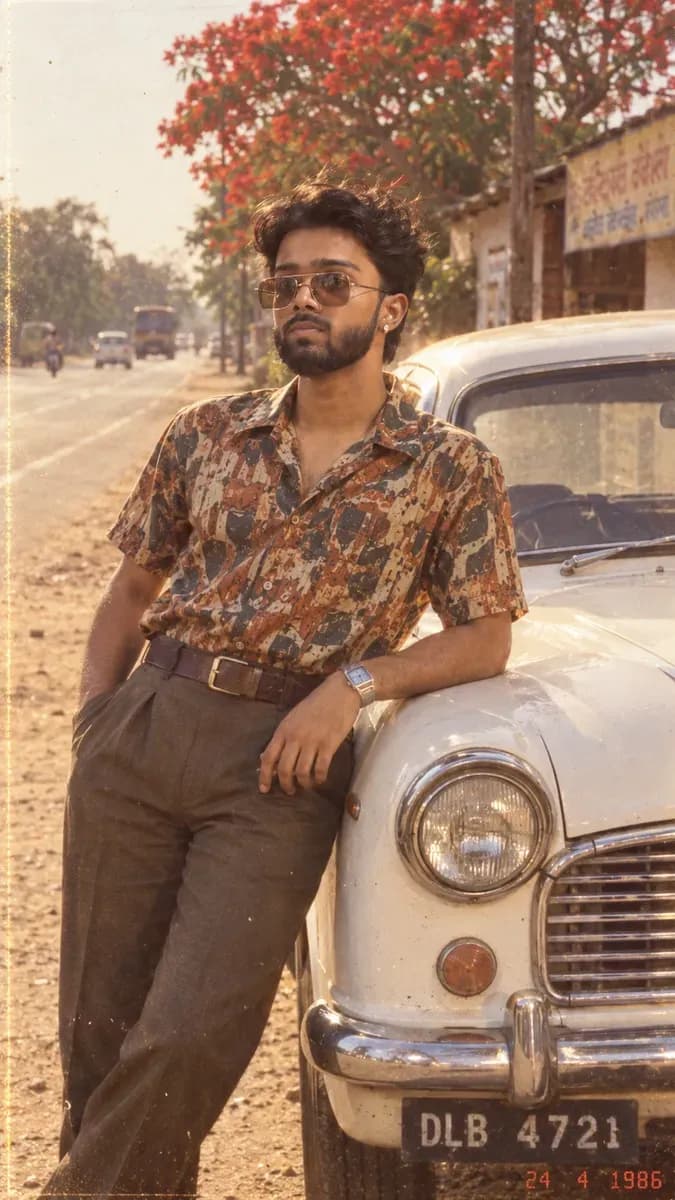 80s Ambassador car roadside portraitThe white Ambassador, the roadside, the late-afternoon sun — with the shape description that stops the model rendering a modern sedan.ChatGPT (GPT Image)Nano Banana (Gemini 3.1 Flash Image)2026-09-10
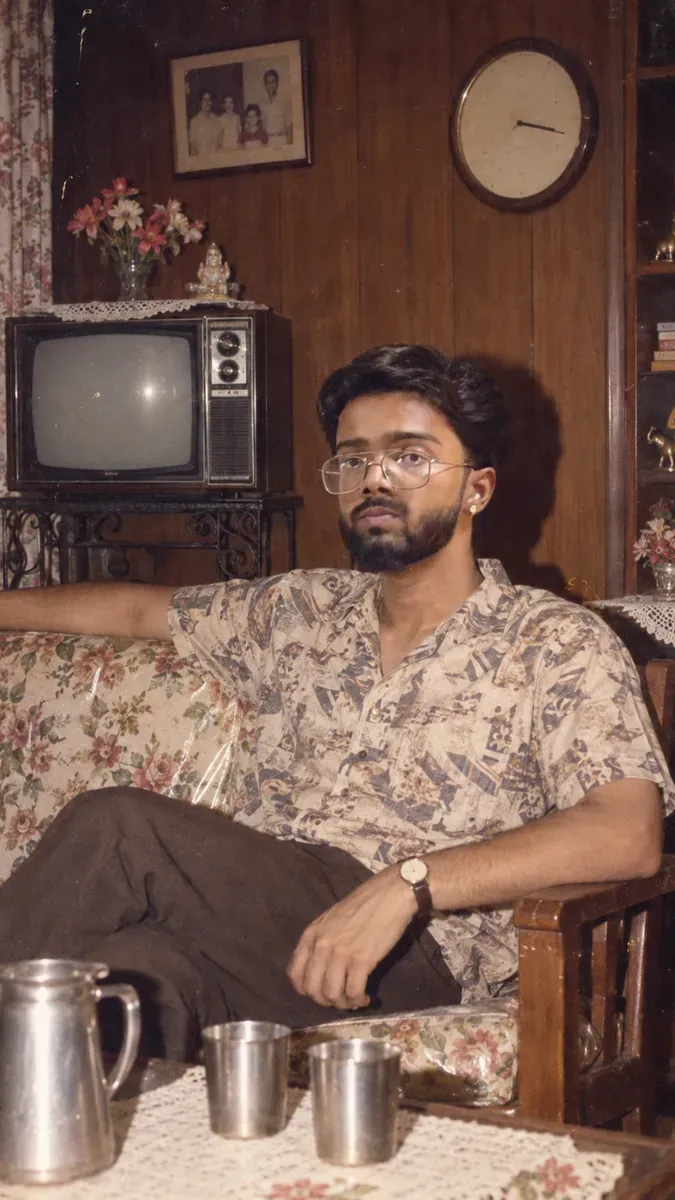 1986 Doordarshan-era living roomWood panelling, a boxy TV on a wrought-iron stand, plastic flowers and a direct camera flash. The middle-class Indian drawing room of the 80s.ChatGPT (GPT Image)Nano Banana (Gemini 3.1 Flash Image)2026-09-10
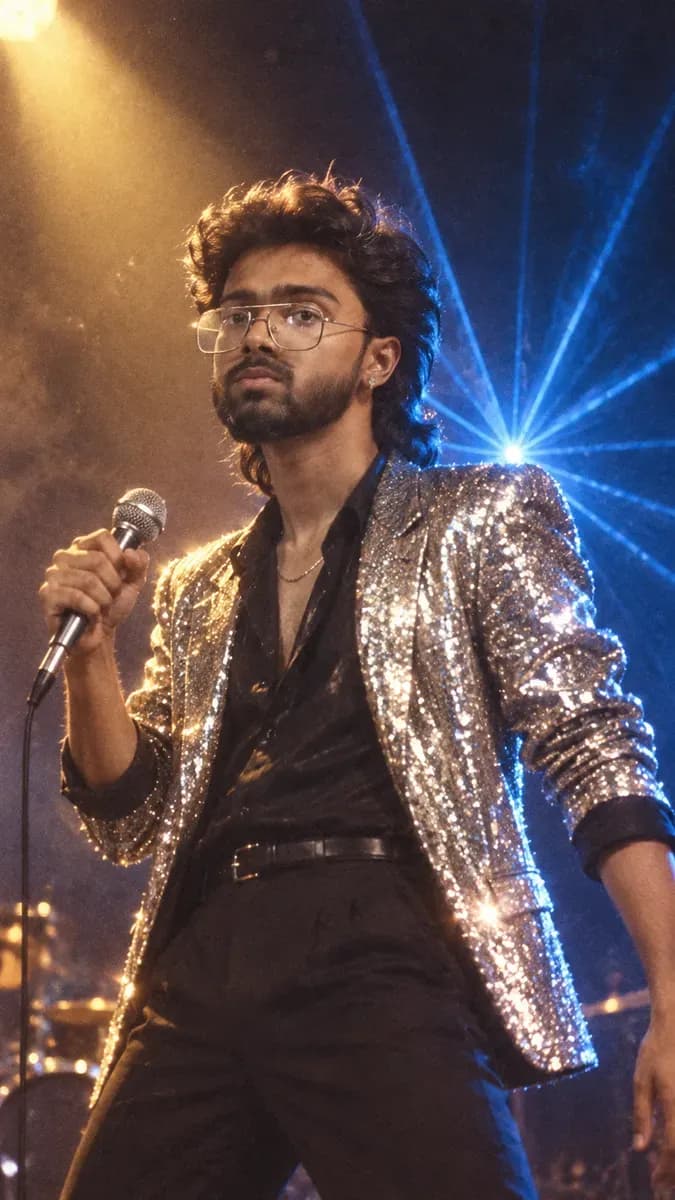 80s disco stage performerSequinned jacket, haze, a laser-starburst backdrop and a hot coloured rim light — with the colour discipline that keeps your face yours.ChatGPT (GPT Image)Nano Banana (Gemini 3.1 Flash Image)2026-09-10
